Behavioral Economics & Strategic Waste Reduction
A dual-behavior intervention proposal leveraging environmental psychology to transition campus dining to compostable packaging and improve student disposal behavior.
Executive Summary
Western Michigan University's dining facilities generate approximately 32,000 pounds of solid waste monthly, primarily from single-use packaging. This proposal outlines a comprehensive intervention to transition 7 campus dining locations to BPI-certified compostable materials while simultaneously addressing the "behavioral gap" in student disposal habits.
Drawing on research from environmental psychology (O'Connor et al., Sussman & Gifford), the strategy moves beyond simple signage. It proposes a restructuring of the physical environment (bin placement) and the introduction of "Compost Ambassadors" to leverage social modeling, projecting a 40-50% reduction in landfill waste within the first academic year.
Strategic Interventions
- •Convenience Drives Compliance: Research indicates that redesigning infrastructure (strategic bin placement at natural exit points) creates a higher lift in compliance than educational campaigns alone.
- •Social Modeling > Information: Peer influence is a critical driver. The proposal introduces "Student Ambassadors" during peak hours to model correct sorting behavior, which research shows is more effective than tabletop signage.
- •The Cost of Friction: Education without infrastructure is futile. Providing compostable bins without transitioning the packaging creates user friction and contamination; the two must launch simultaneously for success.
About this project
Developed for the Department of Psychology (PSY 3456), this proposal applies behavioral economic principles to solve institutional sustainability challenges.
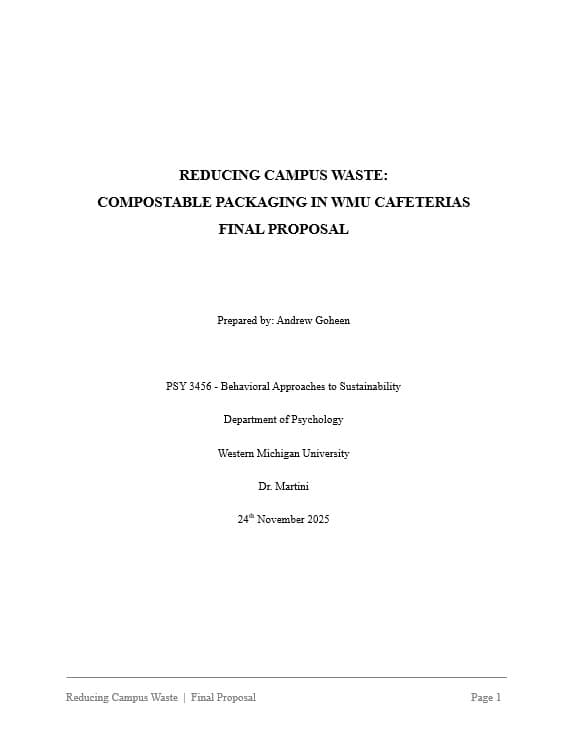
Formal Title
"Reducing Campus Waste: Compostable Packaging in WMU Cafeterias"